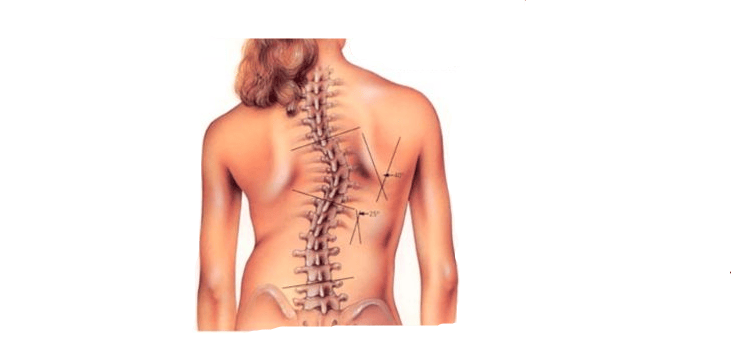
It usually begins with a dull ache, or a pinch that takes residence somewhere between your Shoulder Blades. And then, before you know it, it’s a constant companion throughout your day. Every twist and turn reminds you it’s still lingering there. A quick look at the statistics will tell you it’s part of the back pain silent epidemic. Studies show that pain in these areas affect up to 72% of the population at any single point in time.
The good news is that pain between your shoulder blades is highly treatable. That’s if you access the right treatment. This article will dive into key causes and potential treatment interventions to consider. We’ll start with a quick foundational look at the anatomy between your shoulder blades, then move to causes and treatment options for short and long term relief.
Under the Skin: A Simple Look at What Sits Between Your Shoulder Blades
Knowing what’s between your Shoulder blades helps with understanding the underlying cause and what to do about it:
Thoracic Spine

This is a column of bones extending from the base of your neck to the base of your rib cage. It houses the spinal cord and provides a secure passage for nerves branching out of the spinal cord. These bones articulate with each other at the back through small joints, known as Facet joints. In front, they’re cushioned against each other by special structures known as intervertebral discs.
Muscles

The area between your shoulder blades is also home to deep and superficial layers of muscles. The superficial layer consists of prominent muscles like the Trapezius and Rhomboids, which run sideways, connecting the spine to Shoulder Blades. These muscles are prime movers and stabilisers of the Shoulder Blades. Additionally, they help with stabilising the thoracic and cervical(neck) portions of the spine. The deeper layers consist of smaller muscles which primarily play a stabilising role in the spine.
Ligaments
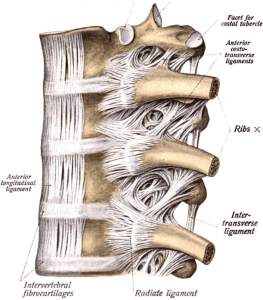
These are tough, fibrous structures connecting spinal bones to each other. They provide passive stability to the spine.
Spinal Cord and Nerves
The Spinal cord is part of the central nervous system, connecting the rest of the body to the Brain. It runs along a small passage in the spine from the base of the head to the low back area. In the thoracic portion of the spine, it sends branches of nerves through small holes(known as foramina), which provide sensation and innervation to the thoracic region.
Ribs

The thoracic spine is connected to a series of ribs, which connect with the Sternum in front to complete what’s known as the Thoracic Cage. Each vertebra is connected to a pair of ribs, one on each side.
Causes of Pain Between Your Shoulder Blades
Pain in this area can be caused by a number of factors. While some can be obvious based on the behaviour and history behind it, others may need a lot more digging to uncover.
Consider this case:
A 43 year-old lady walked into our clinic a few weeks ago, complaining of a month-old, stubborn pain between her shoulder blades. It just showed up without no apparent cause, as a mild discomfort, which she quickly brushed off as one of those “aches of advancing years.” The pain kept getting worse with each passing day untill she could no longer ignore it. She quickly self-diagnosed as a strained muscle from long hours of deskwork and sought the services of a masseuse. The sessions helped but relief was limited to a few hours after the session. A trusted friend referred her to our clinic for a deeper look into the problem and possibly some more effective treatment.
On assessment, we noticed it was something much deeper and bigger than a simple muscle strain so we referred her for an x-ray, which revealed unexpected insights. Her spine’s bone density was visibly lower than normal, which is a key sign of Osteoporosis. A closer look showed she had a small Osteoporotic Vertebral Fracture. This made sense because these kinds of fractures often occur with no obvious symptoms and are commonly misdiagnosed by health care professionals.
We worked together with medical practitioners to make sure the fracture was sorted out after which she went through rehabilitation and eventual discharge. She’s now back to her trade, business as usual, and without pain. Now let’s get into a quick look at common culprits behind mid and upper back pain.
Thoracic Spondylosis

This is an umbrella term referring to degenerative changes that take place in the spine. In this context, it’s characterised by stiffness and pain along the spine in the central areas between your shoulder blades. Key Factors behind its development include:
- Aging: Aging comes with a range of structural and functional changes. Intervertebral discs get stiffer and less flexible due to loss of water. Spinal bones begin losing their bone density, and their surfaces start developing bony spikes known as Osteophytes. Spinal joint cartilages get thinner, and muscle performance starts declining. This means altered spinal mechanics, which often cause excessive stress in spinal joints and muscles. The natural result is persistent pain between your shoulder blades.
- Trauma: Direct trauma or excessive loading(i.e due to heavy lifting) to the thoracic spine can cause injuries such as Fractures and ligament tears. Down the line, the healing process may not fully resolve, which sets the stage for degenerative changes.
Sprains

These involve tears in spinal ligaments. As mentioned earlier, ligaments are tough connective structures that keep the spine stable. Sprains are relatively rare compared to sprains due to ligaments’ robust structural strength. However, excessive loads and high impact trauma can cause tears, which are also graded based on severity:
- Grade 1: Ligament is stretched with minor tears. The joint remains stable.
- Grade 2: Ligament is partially torn.
- Grade 3: Complete tear.
Muscle Spasms
These are involuntary muscle contractions, which often come in with pain of varying intensities. A spasm may occur as a standalone phenomenon, or as a complication of existing issues such as Spondylosis, strains and sprains.
A spasm is basically an overactive muscle due to increased stimulation by the nervous system. It’s explained by what’s known as the vicious cycle of pain:
Muscle tension caused by excessive or prolonged loading creates ischemic conditions(compromised blood supply) within that muscle. These conditions stimulate production of substances known as metabolites, which eventually stimulate sensory nerves within that muscle. This leads to a series of processes in the nervous system which trigger involuntary contractions we call muscle spasms. Unfortunately, these spasms recreate ischemic conditions, completing the cycle of pain.
Nerve Compression
As we considered earlier, the spine houses the spinal cord, which sends nerves to the surrounding areas through tiny holes between spinal bones. If you look closely, you’ll notice it’s quite a tight setup. If anything gets out of place, it can easily compress these nerves or the spinal cord itself. For instance, spinal discs may bulge backwards, causing compression to either the spinal cord or spinal nerves, leading to pain and numbness. Sometimes, it’s a case of structural derangement, causing narrowing of the little holes where spinal nerves come out of the spine.
Fractures

The thoracic spine is an incredibly stable structure, making fractures in this region of the spine relatively rare. However, fractures can occur with enough force or impact from blunt trauma or excessive loading. Spinal fractures aren’t always obvious from xray images, with studies indicating that up to 2/3 of spinal fractures go unnoticed. Osteoporotic Vertebral Fractures are a major culprit. These fractures tend to occur without significant trauma, and may set in with mild pain and other obvious symptoms.
Referred Pain
This is pain that manifests in a body area other than the actual source. Sometimes, problems in other body parts or organs may manifest as pain in the thoracic spine. For instance, conditions affecting the Liver and small intestines may refer pain to the thoracic region, hence pain between your shoulder blades.
This is commonly explained by what’s known as the Convergent-projection Theory. In basic terms, nerves from some internal organs travel to the same areas of the spinal cord as those coming from muscles and skin areas in the thoracic region. When pain signals from the internal organs reach these spinal cord areas, things may get mixed up. The Brain ends up misinterpreting the signals as coming from the thoracic areas between your shoulder blades.
Tumours and Infections

Spinal tumors and infections are a rarity. However, they can be culprits behind seemingly innocent back pains. Spinal Tumors can develop within or outside the spinal cord. However, the majority establish themselves outside the spinal cord, known as Extradural Tumors.
Bacteria, viruses, and fungi can infiltrate spinal structures causing inflammation, and sometimes, significant structural derangement. Infections from other areas like Lungs may find their way into vertebral bones, causing havoc, while others may develop from the spine itself.
Assessment and Diagnosis
From our discussion above, it’s easy to see that pain between shoulder blades can be a result of many things. A comprehensive assessment aimed at identifying the root cause of the pain is imperative.
Assessment
Your physiotherapist/Doctor will begin by asking you a series of questions to get into the history of your condition. Very specific questions to do with when and how it started, aggravating factors, and treatments you’ve received so far aim at getting all relevant details. Previous medical examinations are reviewed, investigative imaging reports read, and more questions about your occupation and lifestyle asked to get the full picture.
This is followed by a physical exam, which involves a range of physical tests to get further insights into the structures which are affected and how the impairments are affecting your physical function.
All this informs a clinical diagnosis and treatment plan, which outlines goals, along with treatment techniques to be used. Further investigations or review by other specialists may be recommended based on the clinical diagnosis and assessment findings.
Physiotherapy Treatment Options
Physiotherapy treatment methods are highly effective for the majority of thoracic pain cases. In fact, recent studies continue to show physiotherapy as safe and highly effective for different forms of thoracic pain including Spondylosis, muscle strains, sprains, spasms, nerve and compressions. Physiotherapists also work closely with other healthcare practitioners in addressing pain and movement challenges met with patients dealing with other spinal problems i.e fractures, spinal infections, and tumours.
Let’s take a look at some of the key treatment approaches you may benefit from:
Manual Therapy
This involves a wide range of hands-on treatment techniques aimed at reducing pain and restoring movement. These techniques are broadly categorized into:
- Soft Tissue Mobilizations: Mobilizing or manipulating muscles and other soft tissues to improve pain, reduce tightness, and optimize tissue healing. Superficial and deep friction massage techniques are commonly used to deal with spasms and painful spots in muscles and soft tissues known trigger points.
- Vertebral Joint Mobilizations: This involves manual mobilization of spinal joints to achieve a range of effects. These include reducing pain, improving spinal joint mobility, and improving overall spinal function.

Exercise Therapy

As the name suggests, this involves using various types of exercises to improve symptoms(pain), mobility and muscle performance. Physiotherapists often combine stretches and strength training routines to optimise treatment outcomes. Stretches promote flexibility in various tissues including muscles, tendons, and fascia. Additionally, they can do wonders for pain reduction through positive effects on muscle spasms and pain control by the central nervous system.
Strength training routines aim at improving muscle performance. Spinal muscles play a crucial role when it comes to stabilising the spine through what’s known as dynamic stabilisation. This is mostly done by deep muscles which “fine-tune” the vertebral bones to stay in line and stable whenever you’re moving or maintaining static postural positions like standing or sitting. Lack of proper stabilisation from muscles often means greater loading in spinal facet joints, causing irritation and pain. Strength training routines aim at improving your muscle’s ability to help with improving spinal mechanics, which means better load handling and less pain.
Electrotherapy

This involves the use of various electrical and physical devices to deal with pain, promote healing, and ultimately, restore function. Treatment methods like Interferential Therapy, and Trans-cutaneous Electrical Nerve Stimulation(TENS) help with pain reduction through stimulation of nerves by low frequency electrical currents. Ultrasound therapy devices generate sound waves into tissues to promote healing through a number of thermal and mechanical effects.
Dry Needling

Dry needling is quickly emerging as a promising addition to mainstream physiotherapy treatment. Emerging research evidence continues to show the approach as one of the most highly effective interventions for musculoskeletal pain. Basically, it involves inserting thin needles into painful spots in the affected muscles or other soft tissues. The idea is to disrupt the pain cycle through a number of mechanisms, with the most plausible being disruption of transmission of pain signals to the central nervous system.
Get in touch with us
Are you struggling with persistent pain between your shoulder blades? You don’t have to ignore or go through it solo. Our physiotherapists bring years of experience and specialization in musculoskeletal problems as part of a solution towards a pain-free life. We are eager to get to the bottom of your pain, and ensure you get the treatment you deserve. Give us a call or just hit the “make appointment” button up top. Looking forward to seeing you soon.
Frequently Asked Questions
There is a wide range of issues that may occur in this area, resulting in pain and sometimes other symptoms like stiffness, burning sensation, and numbness. Spinal wear and tear(Spondylosis), muscle strains and postural abnormalities like Scoliosis and hyperkyphosis are the commonest culprits. Other less common causes include sprains, subtle fractures. Rare causes include infections like Spinal Tuberculosis(Pott’s Disease) and tumours.
Targeted Stretches for the thoracic spinal joints and associated soft tissues along with strength training exercise routines are highly effective for pain relief. However, the type of exercises chosen depend on the underlying cause and other individual factors. Simply put, there is no exercise routine that works for everyone. What works for someone with pain due to postural issues like Scoliosis is different from what works for someone with Spondylosis. The best way to go about it is to seek professional help.
First of all, a physiotherapist will help you uncover the root cause of the pain through a comprehensive assessment. This informs the treatment goals and plan, which may involve a number of treatment approaches or methods. Key treatment options include manual therapy, exercise, electrotherpay, and other alternative complementary techniques like dry needling.